Wet-Season Roofing Cleanup in Salem: A Practical Guide
Salem's wet season runs half the year, and it shapes when roofs get done and how heavy the debris is. Planning around it saves money.
In this guide
- The valley's roofing calendar
- Why wet shingles cost more
- Storm and leak damage doesn't wait
- Moss, rot and hidden decking
- Placement and drainage
- Tarped loads and quick turnarounds
- Getting winter roofing done
The Willamette Valley is famously green, and it is green because it rains - a long wet season stretching from fall through spring. That climate shapes the Salem roofing calendar and, with it, how roofing cleanup works. A roofing container in the wet months just needs a little more planning.
The valley's roofing calendar
Because so much of the year is wet, Salem's roofing work is compressed into the drier stretch from late spring through early fall. When the weather is good every roofer in the valley is booked, and container availability tightens right along with roofer availability.
The practical consequence is simple: if you are planning a re-roof by choice, book the container ahead for the summer window, because that is when demand peaks. And if you are reacting to a problem in the wet months, expect to work around the weather.
Why wet shingles cost more
Roofing is a weight job, not a volume one. Asphalt shingles are dense - a square runs 230 to 250 pounds - so a container reaches its tonnage allowance while it still looks like it has room. Give us the square footage and the number of layers and we will size it right.
Wet weather makes this worse. Wet shingles weigh appreciably more than dry ones, and an open container sitting through Salem rain gains real weight from the water alone. Since you are already close to the tonnage limit on a roofing load, that added water weight is a direct cost. Keep the rental tight when weather is coming, get the load off promptly, and where you can, work the tear-off in a dry window.
Storm and leak damage doesn't wait
Not all roofing is planned. Winter storms, wind and the sheer persistence of valley rain find every weak point, and leak and storm damage does not wait for the dry season. Demand for containers spikes after a big storm.
If you are dealing with wet-season roof damage, call early and be flexible on the day. The roads and access are hardest right after a storm, and every roofer is scrambling at once. We will get to you as fast as conditions allow, and being Salem-based we know the routes well enough to reach most properties even in poor weather.
Moss, rot and hidden decking
The wet valley climate grows moss, and moss on a roof holds moisture against the shingles and the decking beneath. That means two things for a tear-off here. First, roofs often need doing a little sooner than in a drier climate. Second, and more expensive, there is frequently more rotten decking underneath than anyone expected.
You cannot know how much sheathing needs replacing until the shingles come off, and in this climate it can be substantial. Build some margin into the container plan for the decking, because it is the most common cost surprise on a valley re-roof.
Placement and drainage
Wet-season placement wants a little thought. The container still gets planked to protect the driveway, but a spot that drains rather than pools is better - a loaded roofing container sitting in standing water on saturated valley clay can be awkward to collect.
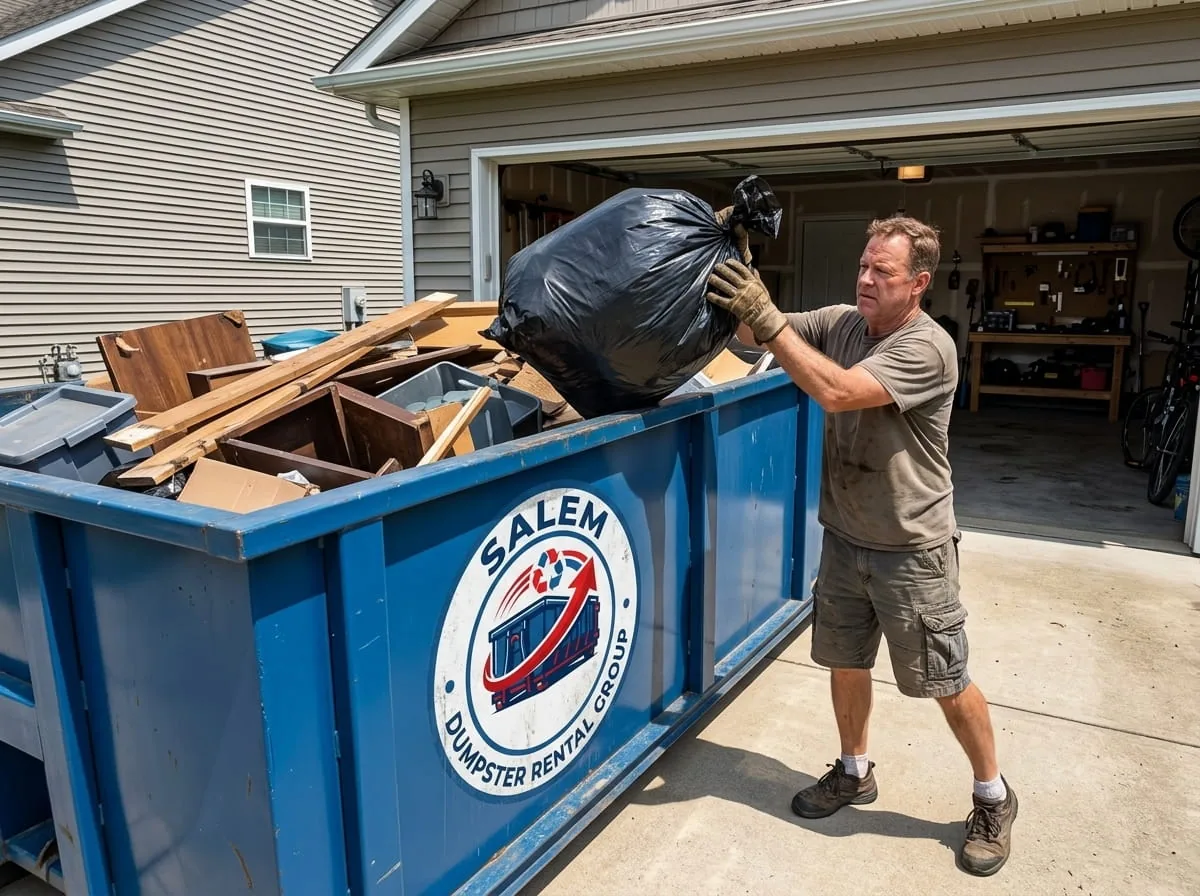
Position the container as close to the tear-off as the site allows, since every yard of horizontal carry is repeated hundreds of times, and ask for the low-wall option so the crew is throwing down rather than lifting over a high rim. Both save real time on a wet day when nobody wants to be up there longer than necessary.
Tarped loads and quick turnarounds
Every load leaves tarped and secured, which in the wet season also keeps rain off the loaded debris on the haul and stops anything blowing loose. And being Salem-based, we can reach you and turn a roofing job around promptly even when the weather is marginal - local knowledge of the valley roads counts for a lot when it is pouring.
Getting winter roofing done
Roofing does happen in the wet months - it has to, when a roof is leaking. When you call about a wet-season roofing job, give us the square footage and layers so we size for weight, tell us about access and drainage, and we will place close to the work, fit the low-wall option, keep the rental tight around the weather, and tarp every load. The valley rain is a fact of life here; it does not have to stop the job.
Book a container in Salem
One flat rate covering delivery, seven days, pickup and disposal.
(971) 273-1824Questions readers ask about this
When is the best time to re-roof in Salem?
The drier stretch from late spring through early fall, when the weather cooperates. That's also when roofers and containers are busiest, so book ahead. Wet-season roofing happens too, mostly for storm and leak damage that can't wait.
Does the wet weather really affect roofing cost?
Yes. Wet shingles weigh more than dry, and an open container gains weight from rain. Since roofing loads are already close to their tonnage limit, that water weight is a direct cost - so keep the rental tight and get the load off promptly.
Why is there always more decking to replace than expected?
The wet valley climate grows moss, which holds moisture against the decking and rots it. You can't see how much until the shingles come off, and it's often substantial. Build some margin into the container plan for it.
Can you deliver a roofing container in the rainy season?
Yes, right through it. We size for the wet-weather weight, place close to the tear-off with a low-wall option, pick a spot that drains, and tarp every load. Being Salem-based, we reach most properties even in marginal weather.